
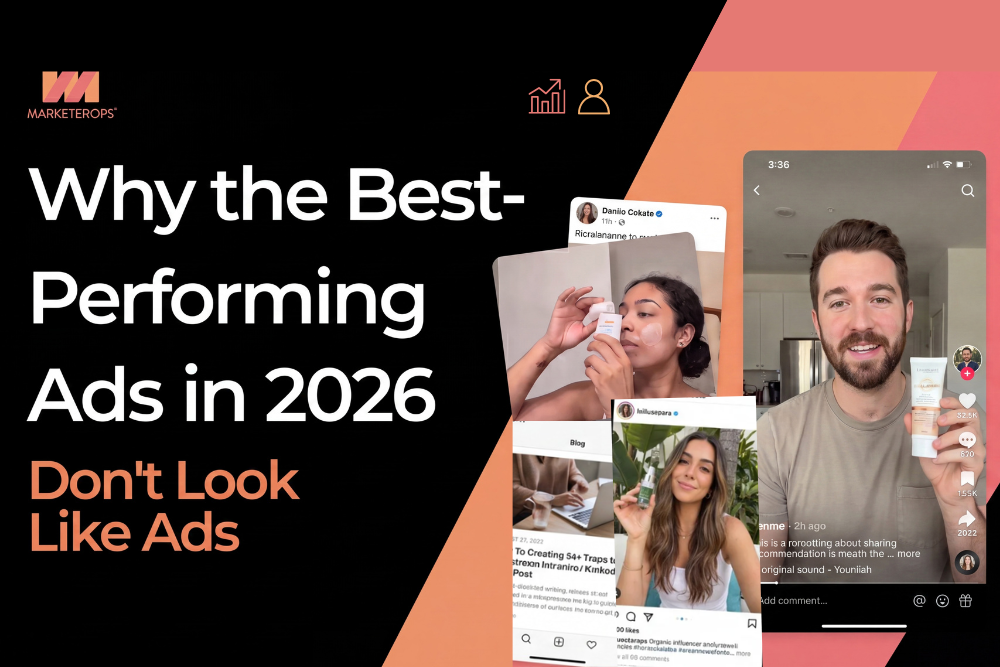
Seventy-seven percent of marketing leaders now say content made by creators — real people talking about a product from their own point of view — outperforms traditional branded advertising on nearly every measurable metric (globally, CreatorIQ 2026). Not on likes or shares. On actual business results: click-through rates, purchase conversions, and the cost to reach a thousand potential customers. A report published by CreatorIQ in June 2026 confirmed what many brands have quietly known for some time: creator-made content now makes up 44% of all paid advertising creative used by brands globally. This is not a trend. It is a structural shift in how advertising works.
What Just Happened
Based on surveys of paid media leaders and marketing executives across industries, the CreatorIQ report found that 92% of brands now use creator content in their paid advertising in some capacity. More significantly, two-thirds of the budget increases going into creator programs are being reallocated directly from traditional paid media — display ads, produced video, and studio creative.
Total global spend on creator advertising reached $44 billion in 2026, up 18% from $37 billion the year before, growing faster than the broader advertising market (globally, Influencer Marketing Factory 2026).
The shift is driven by performance, not novelty. Creator content outperforms traditional ad creative on click-through rate (65% higher), purchase conversion rate (58% higher), and cost-per-thousand impressions efficiency (50% higher), according to the same CreatorIQ data (globally). More than eight in ten marketers report at least two times return on their creator marketing investment.
Why this matters for your business
The economics work at every budget level. Campaigns using creators with audiences between 10,000 and 500,000 followers — often called micro-influencers — deliver five to eight times the return on investment of campaigns built around celebrity-level creators, at a fraction of the cost (globally, Influencer Marketing Factory 2026). Long-term partnerships with a consistent group of creators produce 70% higher engagement than one-off sponsored posts.
In Latin America, this shift is moving even faster than the global average. Influencer marketing spending in the region grew 45% in a single year, according to market research firm Mobility Foresights, which projects the Latin American creator economy to grow from $38.5 billion in 2025 to $112.7 billion by 2031 — a compound annual growth rate of 19.7% (in Latin America). In Brazil, TikTok reaches 88% of key consumer demographics, and micro-influencers in the region generate engagement rates of 8 to 12%, well above global averages. For companies with customers in Brazil, Mexico, or Colombia, creator-led marketing is not a future consideration — it is a current competitive advantage.
What business leaders need to understand
Creator marketing has moved from a top-of-funnel awareness experiment to a primary performance channel for a growing number of companies. The reason is straightforward: consumers — particularly those under 40 — respond very differently to content that feels human than to content that feels produced. In many product categories, high production quality now works against you. It signals “this is an ad” before a viewer has decided whether to trust you.
The operational challenge is not finding creators. It is building the process to work with them consistently: clear creative briefs, usage rights agreements that let you run their content as paid advertising, and a measurement system that connects their activity to actual sales. Most companies underestimate this operational work — and it is exactly where an experienced external partner adds real value, not just in finding the right creators but in managing the full workflow and reporting results in terms that connect back to the business.
Three actions to take this week
1. Run one creator-produced video as a paid ad. Choose a creator whose audience matches your customers, secure usage rights upfront, and run their content as a paid ad on Meta or TikTok for two weeks. Compare it directly against your current studio-produced creative. The results tend to be surprising.
2. Commit to a relationship, not a post. A single sponsored post rarely produces meaningful business results. Budget for a three-to-six month collaboration with a small group of creators who genuinely use and understand your product. Consistency is what builds audience trust — and trust is what converts.
3. Define business metrics before the campaign starts. Set measurable goals — website visits, form completions, purchases — before the first piece of content goes live, and confirm your tracking can connect creator activity to those outcomes. Engagement numbers alone are not a sufficient measure of success.
The brands performing best in digital marketing right now are not necessarily those with the largest budgets or the most polished creative. They are the ones who have learned to work with people their customers already trust. Building a creator marketing operation that consistently drives business results takes time, clear processes, and strong measurement — exactly the kind of work where a partner with real experience helps you move faster and make fewer expensive mistakes. If you have been treating creator content as an optional add-on to your media plan, the data in 2026 says it is time to move it to the center.

Rosalina D. Willaim
Blogger/Photographerhe whimsically named Egg Canvas is the design director and photographer in New York. Why the nam
julio 6, 2026

julio 14, 2025